Showing posts with label DOH. Show all posts

Saturday, March 7, 2020

Social Media in the Time of COVID-19


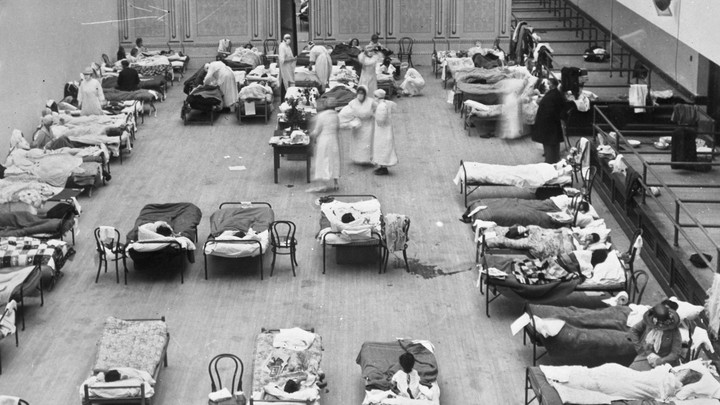
Volunteer nurses from the American Red Cross in 1918.

The Coronavirus is No 1918 Pandemic

Remembering how the great flu pandemic in 1918 cost the lives of 100 million lives worldwide, we look at how more equipped we are in handling this novel coronavirus outbreak.

DOH announces 6th confirmed case of COVID-19

As of March 7, 2020, the Philippine Department of Health recommended to President Duterte the declaration of a public health emergency as it confirmed local transmission with the announcement of the 6th confirmed case of COVID-19 in the Philippines.

Updates on Novel Corona Virus Disease (COVID-19)

Data on Daily Global Situation as of March 6, 2020 show that there have been 98,192 confirmed cases with 2,873 new cases.  In China, 80,711 confirmed with 146 new cases.  Outside China, there have been 17,481 confirmed with 2,727 new cases.

Responsible sharing of information

Secretary Duque also appealed for responsible sharing of information, that all healthcare providers, institutions and stakeholders to exercise prudence in sharing sensitive information, balancing public health and safety thru contact tracing while ensuring individual rights to privacy.

Here is a reminder for professional behavior on social media.  Negativism, outright ranting and complaints serves no purpose in addressing the identified health problem.

With all hands on deck, let us discuss the roles and responsibilities of each healthcare provider, institutions, stakeholders and the general public in preventing the spread of COVID-19.

T1. How has COVID-19 affected society today?

T2.  In what ways can we help efforts in controlling the epidemic?

T3.  What is the role of social media in addressing the spread of COVID-19 considering the announcement of local transmission in the Philippines?

Sunday, June 30, 2019

First of all, DO NO HARM!


It was during the Public Health Forum 2019 when I answered the question "what is your biggest regret in medical school?" with "I was not able to document my experiences in medical school..."

So here I am taking each available moment to write about things that seem important to me.  Stories that keep me awake at night and stories that motivate me to wake up in the morning and keep trudging through tedious and challenging work.

Today was such a day.

I was originally expected to attend the ALARM course of POGS.  However, today was the HIV ENDGAME - when the Philippine Infectious Disease Society for Obstetrics and Gynecology (PIDSOG) finalizes its position statement on the interventions for the prevention of mother to child transmission of HIV infection.  There are three known modes of HIV transmission.  These include unprotected penetrative sexual intercourse, transfusion of infected blood and from an infected mother to her child.


Of these three, perinatal transmission of HIV infection is easiest to address.  There is poor uptake of condom use among males who have sex with males and freelance sex workers.  Drug rehabilitation, needle exchange and even washing of needles have proven ineffective among injecting drug users.  However, pregnancy is a condition where women generally seek consult with a physician, hopefully an obstetrician.  Prenatal check up is an opportunistic event where we can get pregnant women tested for HIV, linked to care and initiated on anti-retroviral therapy with adherence.  During pregnancy, a mother can transmit the virus to her child (1) during pregnancy, (2) during labor and delivery and (3) during breastfeeding.  Therefore, the known interventions include (1) initiation of anti-retroviral drug therapy as early as possible during pregnancy to reduce the viral load (2) to deliver these patients via elective cesarean delivery as many multi-center trials show that cesarean delivery reduce vertical transmission in untreated patients by as much as 30% and (3) avoidance of breastfeeding, especially in high risk patients who have not started anti-retroviral therapy with viral load >1,000 copies, may prevent transmission of the virus to the neonate.


We consider that public health looks at the bigger picture, that many women living with HIV might not have access to the care that she needs.  However, considering that women living with HIV are strongly advised to deliver in a facility capable of dispensing anti-retroviral drugs, referral to centers capable of doing emergency or elective cesarean section and providing alternative infant feeding modes would not be too difficult.


It is difficult to bend and compromise to policies when evidence shows that there is harm if we do nothing.  As clinicians, first of all, DO NO HARM.  We also need to remember that once we compromise, we would be changing the way other policies will be directed.

  • If we allow vaginal delivery to be the standard of care for women living with HIV, health insurance might not consider HIV infection as an indication for cesarean delivery.  This will make it harder for us to facilitate delivery of these HIV-exposed neonates.
  • If we allow breastfeeding to be the standard of care for all women living with HIV, it goes against the teaching that breastmilk is one of the body fluids that can transmit HIV, so why would we give something to our children that would not be 100% risk-free?  Consider the milk code and the mother-baby friendly hospital and "breastmilk is still best for babies" - there is always an exception to the rule.  Let HIV infection be that exception, so that we can find ways for the newborn to survive the first one to two years of life without spending the rest living with HIV.
In the end, patients always have a choice.  Physicians need to respect patients' autonomy, for them to decide for their own health.  Who are we to dictate how they want to deliver and how they intend to feed their baby? After all, it would be the mother who will ultimately take care of her child, whether infected with HIV or not.


Friday, September 1, 2017

USE OF TECHNOLOGY TO IMPROVE MATERNAL HEALTH


How do we keep our mothers from dying?

Reducing maternal mortality was one of the millennium development goals (MDG) which the Philippines was not able to meet, despite all the government funds allotted for programs and intervention.  In our own local professional society, more than 90% of maternal deaths occur in the overcrowded congested government hospital.  Many of the patients present too late to prevent death. Hypertensive complications and hemorrhage is the most common causes of death. 

In response to the MDGs, the Department of Health (DOH) issued Administrative Order 2008-0029 “Implementing Health Reforms for Rapid Reduction of Maternal and Neonatal Mortality” which provides for several interventions in the Maternal, Newborn, Child Health and Nutrition (MNCHN) program including the Essential Intrapartum and Newborn Care (EINC, also known as Unang Yakap or First Embrace), Lactation Management trainings (LMET), Basic Emergency Obstetric and Neonatal Care (BEmONC) among other programs.  We wonder if any of these efforts are making a dent in improving maternal care.  Health policy groups have studied ten years of Philippine health service delivery and have shown very minimal change in health statistics across all programs.

During a regional conference on research and innovation, we came across the RxBox which contains a blood pressure apparatus, a fetal monitor, maternal tocometer and other functions all rolled into one.  This is expected to empower healthcare workers in hard to reach place with the diagnostic abilities of higher levels of care.  How has this been employed in our communities?

In this era of research, innovation, information communication technology and social media, what other technologies are available which we have not yet maximized to reduce maternal deaths and improve maternal health in your area?

What are the challenges to maternal health in your area?
What technologies are available to improve maternal health?
What is the role of social media in improving maternal health?


Saturday, September 24, 2016

DOH Integrated Essential Maternal and Newborn Care

Training of Trainers on the Integrated Essential Maternal and Newborn Care (EMNC) and Lactation Management Training (LMT) for Health Care Providers in Hospitals
September 20-24, 2016


The Department of Health has a lot of programs, even for the same beneficiaries there are different programs.  For maternal and child health for example, we have the Essential Intrapartum and Newborn Care (EINC), the Kangaroo Mother Care (KMC), the Lactation Management Training (LMT) and even the Basic Emergency Obstetric and Newborn Care (BEmONC) training and Infant and Young Child Feeding (IYCF).  To make things simpler, we now have an integration of all these training programs into one broad training of trainors, much like a sampler of everything.  Hence, the Integrated Essential Maternal and Newborn Care and Lactation Management (EMNC-LM)!


As is also the norm since my three (3) years of working at the Vicente Sotto Memorial Medical Center, we are tapped by the DOH as trainers and facilitators.  Rising up to the challenge of a myriad of conflicting schedules, we managed to respond.


The first batch took place on June 13-18, 2016 at Bayview Park Hotel in Manila.  


The second batch was conducted at the Cebu Business Hotel in Cebu City. For the Cebu batch, participants include Far North Luzon General Hospital, Luis Hora Memorial Regional Hospital, Novaliches District Hospital, Batangas Medical Center, Eastern Visayas Regional Medical Center, Schistosoma Research and General Hospital, Amai Pakpak Medical Center, Mayor Hilario Ramiro Sr Regional Teaching and Training Hospital, CARAGA Regional Hospital, and Vicente Sotto Memorial Medical Center. 


Aside from introducing the laws to protect breastfeeding and the support system needed to ensure continuous successful feeding, it has to start long before labor and delivery, possibly during antenatal care. This sentiment was echoed during the last session on supportive supervision.


The programs on promoting breastfeeding should consider the hospital policies, the capabilities of the healthcare works, the health education and promotion classes, as well as support groups in the community.

This training seminar included also facilitation and communication skills, in addition to promotion of breastfeeding during pregnancy, through EINC especially during non-separation of mother and child during the entire hospital stay, practices that protect breastfeeding, as well as introducing Kangaroo Mother Care for preterm babies and low birth weight babies.


The participants visited the Vicente Sotto Memorial Medical Center to interact with the mothers and to experience for themselves how a busy overcrowded government hospital implements government programs despite the challenges of inadequate space maximizing 300-400% bed capacity, undermanned service areas and limited resources.  

It warms my heart to hear that the participants appreciated the presence of the Intensive Maternal Unit, which aims to separate pregnant patients with special concerns such as hypertension, preterm labor, infections during pregnancy and antenatal bleeding.


As a case in point, when we had to move temporarily to the Trauma Center for the duration of the construction of the Perinatal Care, we only had a labor room-delivery room complex with the neonatal intensive care unit attached to it.  We had no extra space.  We really had to request for a specific space for the Intensive Maternal Unit (IMU).  Patients with high risk pregnancies complicated by hypertension, antenatal hemorrhage, preterm labor, gestational diabetes mellitus, infections in pregnancy, and other co-morbidities are admitted at the Intensive Maternal Unit, which is under the supervision of maternal health specialists like the perinatologist and the infectious disease specialist.  With cohorting as a strategy, we noted that the conditions of these patients could not be managed while they were staying at the jampacked labor room.  Patients in labor have to take turns lying down on the bed because several of them have no choice but to share on bed.  Patients in labor understandably feel discomfort and intense pain due to childbirth.  These uncomfortable circumstances would not help control the blood pressure of a hypertensive, for example. Hopefully, all government hospitals would have an intensive maternal unit, supervised by a maternal-fetal medicine/perinatology specialist so as to reduce maternal and child morbidity and mortality.


In the end, what is important is the identification of champions for the program - whether in the community, in the hospital or in the head office of the Department of Health.  These are people who truly believe that by implementing these programs, our population of mother and children will be better fed, better nourished, better cared for and healthier.  Congratulations to the team of Dr Anthony Calibo and Ms Aya Escober!


Here is the video TV commercial by the Department of Health for the promotion of breastfeeding, All for Health towards Health for All!