Comforting words from a friend and confidante:
There's a text in the Bible in the book of Job where he says, "the Lord gives and the Lord takes away. Blessed be the name of the Lord" Job said that after he lost all his riches, including his household in just one day.
Sometimes when God allows us to go through pain and suffering, it is because He is preparing us for something better. It is very hard to see it at this point but in time, everything will come to light.
There's this Christian song that runs this way... "God is too wise to be mistaken, God is too good to be unkind. When you don't understand, when you can't see his hand, trust His heart.
I hope you will find that comfort, Doc Helen. You are a good person, somebody i always look up to. And you deserve something good in your life.
Good night. Sleep well.
06142020 - Things happen for a reason. We trust in God's greater plan.
Thursday, June 18, 2020

Saturday, May 23, 2020
REDESIGNING SOCIETY TO ADAPT TO THE NEW NORMAL DURING COVID-19
Experience with the enhanced community quarantine was difficult as it suddenly limited our movements and scared us to closing doors to our neighbors and staying home to cut off the risk of transmission of this invisible enemy.
Cebu City was one of the cities in the Philippines with a lot of COVID-19 positive cases and we tried our best to cope with aggressive community testing vis a vis hospital-based testing for severe and critically symptomatic patients. We also see during this time all the innovative changes to adapt to challenges posed by the risk of transmission of COVID-19. We also see teamwork, unity and the caring communities of volunteers and donors.
As some of the communities in the Philippines reopen to resume economic activities, there is a need to redesign society to adapt to the "NEW NORMAL" for as long as the threat of transmission of COVID-19 is still there. We hear about ECQ, GCQ and MGCQ in the news, classification of which should be based on epidemiology of COVID-19 in the localities. Under the revised guidelines of the Inter-Agency Task Force for the Management of Emerging Infectious Diseases (IATF-EID), an area can be considered as under the "new normal" if the community quarantine implemented has transitioned into modified general community quarantine (MGCQ) which is the most relaxed community quarantined implemented by the government.

The Department of Health has already issued Department Memorandum 2020-0220 on interim guidelines on return-to-work which companies have started reviewing to comply for reopening and resuming work activities. There are a lot of aspects in society to be considered for the "new normal" include education, agriculture, industry, corporate world, tourism and recreation.
Amid all these preparations to reopen societies, Europol warns the public in every country in Europe to protect your children, house, finances and data now that confinement measures are starting to relax.
What is your definition of the new normal?
What is the role and impact of social media on day to day activities for the new normal?
What are your suggestions for redesigning our communities and work places to adapt to the new normal?
Tuesday, April 28, 2020
The Cost of COVID19
Today we discharged and sent off the very first COVID-19 patient we admitted at the Emerging Re-Emerging Infectious Disease (EREID) Unit of our hospital. This patient was a 53 year old flower vendor who lived a simple life with their family in the mountain barangays of Cebu City. Faced with a mild stroke, hypertension-related heart problems and diabetes mellitus, this patient inspires us with her determination to live and beat COVID-19. Her daughter's sacrifices waiting and "living" just outside her mother's isolation room for 37 days was equally awe-inspiring. The love of a daughter for her mother, epitomizing the saying "believing without seeing" and riding on faith.

The family reunion is poignant and beautiful. The family thought they would not be the patient again, knowing she was intubated and in critical condition. Today her requested song reflects how we feel:
"Now look at me
Yes, a different me
Back on my feet again
I'm not afraid to face the world again
Cause you taught me how to be strong
You made me live again"
During the FB LIVE on Mental Health Check: Resilience and Coping Strategies, we discussed witj our Finance and Management Officer Ms Maureen Bien all about the actual cost of getting sick of COVID19 and how the government and the donors and volunteers help patients tremendously during these catastrophic events, and how staying at home to prevent COVID-19 transmission can really save the government a lot of money!

Monday, April 27, 2020
COVID-19 Chronicles

We are now on our Season 2 of the VSMMC FB LIVE and I realized that it has been a long time since I first made my video on information how to prevent transmission of COVID-19, even struggling with the Cebuano dialect. My tongue felt like it was twisted and turned and my head was spinning doing translation as fast as my mouth could form the words... This was BEFORE the first community quarantine and I was in Palawan, attending the IHAC orientation by the Bureau of International Health Coordinators. We shot the video using my cellphone on the balcony of our hotel room.
Now I realized that a lot has happened since then and I wasn't even able to write anything to document the experience.
Therefore, I aim to write my realizations and challenges of each day as we fight to survive this pandemic.
Stay safe!
Stay healthy!
Stay informed!
Saturday, March 7, 2020
Social Media in the Time of COVID-19
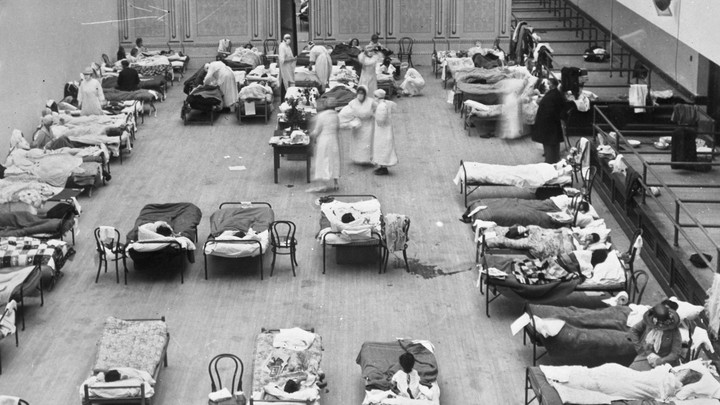
The Coronavirus is No 1918 Pandemic
Remembering how the great flu pandemic in 1918 cost the lives of 100 million lives worldwide, we look at how more equipped we are in handling this novel coronavirus outbreak.
DOH announces 6th confirmed case of COVID-19
As of March 7, 2020, the Philippine Department of Health recommended to President Duterte the declaration of a public health emergency as it confirmed local transmission with the announcement of the 6th confirmed case of COVID-19 in the Philippines.
Updates on Novel Corona Virus Disease (COVID-19)
Data on Daily Global Situation as of March 6, 2020 show that there have been 98,192 confirmed cases with 2,873 new cases. In China, 80,711 confirmed with 146 new cases. Outside China, there have been 17,481 confirmed with 2,727 new cases.
Responsible sharing of information
Secretary Duque also appealed for responsible sharing of information, that all healthcare providers, institutions and stakeholders to exercise prudence in sharing sensitive information, balancing public health and safety thru contact tracing while ensuring individual rights to privacy.
Here is a reminder for professional behavior on social media. Negativism, outright ranting and complaints serves no purpose in addressing the identified health problem.
With all hands on deck, let us discuss the roles and responsibilities of each healthcare provider, institutions, stakeholders and the general public in preventing the spread of COVID-19.
T1. How has COVID-19 affected society today?
T2. In what ways can we help efforts in controlling the epidemic?
T3. What is the role of social media in addressing the spread of COVID-19 considering the announcement of local transmission in the Philippines?

Wednesday, February 12, 2020
Questions on HIV Sero-Discordant Couples
I was fortunate to be invited as speaker for the SHIP online course for HIV treatment hub staff in Mindanao and NCR, to enlighten them about prevention of mother to child transmission of HIV infection. However, the COVID-19 prevented me from giving my lecture live so here is my contribution to the cases discussed, as these are scenarios we encounter often.

1. Correct and consistent condom use reduces the risk of HIV transmission, but the risk is not zero.
2. ARV adherence reduces the HIV viral load down to undetectable. If undetectable = untransmissible. This means the risk of transmitting HIV to the HIV negative partner is very very low, but still the risk is not zero.
3. The HIV negative partner can take PrEP or pre-exposure prophylaxis. He/she takes ARV to reduce the risk of HIV transmission.
In reality, the only expression of love that is 100% free of risk of HIV transmission is abstinence.
Still, with our ARVs effective in reducing the HIV viral load, it is possible for serodiscordant couples to have unprotected penetrative sexual intercourse without transmitting the infection to their partners.
If the couple wishes to get pregnant, it would be best to learn about the woman's fertile period using the symptothermal method (calendar method, basal body temperature and cervical mucus method combined). The couple should have unprotected penetrative sexual intercourse every other day during the woman's fertile period. This reduces the exposure of the HIV negative partner to risk of HIV transmission and allows for greater chances of getting pregnant.

If the pregnant patient is PLHIV, no need to do HIV testing. We just request for baseline prenatal labs and screen for opportunistic infections. We request also for CD4 count and viral load. We usually deliver by cesarean section as this has been proven by research to significantly reduce risk of HIV transmission to the newborn. Any hospital capable of delivering a pregnant patient via cesarean section is equipped to deliver PLHIVs so long as standard precaution is observed to protect the healthcare worker. If we go back to the modes of transmission, then there is very little chance of the healthcare worker getting HIV via occupational transmission.
The PLHIV mother needs to weigh the benefits and risks of exclusive breastfeeding versus exclusive replacement feeding, but we do not recommend mixed feeding for the HIV-exposed newborn.
If the viral load near term is <1,000 then the patient may opt to deliver vaginally and even breastfeed with very low risk of HIV transmission to the newborn. The risk, however, is not zero.
For the HIV-negative pregnant partner of a PLHIV, HIV testing may be done as early as the first prenatal visit. HIV testing may be done every trimester if there is a continuing risk for HIV transmission. Otherwise, routine prenatal care should be provided for the pregnant patient and indications for cesarean delivery will follow the usual clinical practice guidelines.
As HIV treatment staff, we can help prenant PLHIVs by referring them as early as possible to OBGYNs for prenatal care so that complications can be identified early, ARVs can be initiated as early as 14 weeks and continued for life, those already on ARV can be assured that it is safe to continue taking their ARVs, to connect these PLHIV mothers to appropriate suport groups, as well as to celebrate their pregnancies not as problems to address but as gifts from God.
Life goes on with HIV, basta naka ARV!
Saturday, February 1, 2020
Panic and Anxiety brought about by 2019 Novel Corona virus

With the deluge of shared text messages and forwarded videos and infographics, fake news has the propensity to pop up on my cellphone and social media newsfeed. People walking in the streets are all wearing face masks. Everyone seems in a panic to procure their own face mask, because all suppliers are out of stock. This 2019 novel corona virus has caused panic and anxiety and it's all we talk about especially when one confirmed case quarantined in Manila allegedly travelled to Cebu and Dumaguete before she was confined in Manila. What really do we know about this virus?
My professional advice: wait and watch out for the official advisories from the DOH, the top authority in the country for health.

How can we regulate sharing of fake news that cause public to panic? Always recommend to get news and evidence-based information from credible sources.

Subscribe to:
Posts (Atom)